


Why do saunas use wooden building materials?
author: Xin Rui
2024-04-16
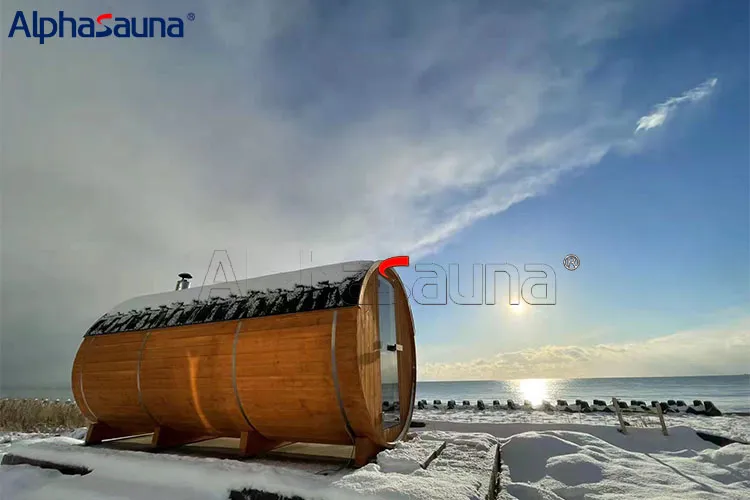
From the origin of the sauna, the earliest sauna rooms may have been situated in natural caves or constructed within simple wooden structures to create a sauna environment. These primitive saunas likely utilized a fire source to heat the space. Although such saunas were relatively simple in form and structure, wood appears to have always been the preferred building material.
You might be interested in understanding why wood is favored as the primary building material for saunas, as well as which types of wood are most suitable for sauna construction. Let's delve deeper into the reasons behind the preference for wood, explore the most popular sauna woods available on the market, and more.
Why choose wood as a sauna material?
The word "sauna" originates from the traditional Finnish approach to health therapy and relaxation. Various countries and regions boast different types of saunas and distinctive cultural practices. Typically, materials used in sauna construction encompass wood, stone, fiberglass, metal, insulation materials, and more.
Reasons for choosing wood
Geographically:
most areas in Finland and neighboring countries are surrounded by forests abundant in wood resources, which serve as primary materials for manufacturing and construction industries. Furthermore, the presence of forests shapes traditional culture.
In practical terms, in the sauna, when bare skin comes into contact with wood, it doesn't feel as hot as touching a stone wall, offering a protective effect on the skin.
In terms of wood properties
•High temperature resistance
Certain woods exhibit excellent resistance to the high temperatures found in sauna rooms, playing a crucial role in safeguarding the skin from burns during sauna sessions.
•Thermal insulation
Wooden sauna rooms possess good thermal insulation properties, helping to maintain optimal temperature levels and prevent heat loss.
•Antibacterial properties
Certain woods possess natural antibacterial abilities, which aid in reducing the growth of mold and bacteria, thereby ensuring the sauna's hygiene.
•Natural aroma
Certain woods emit a natural aroma that enhances the sauna experience, believed to contribute to relaxation of the body and mind.
•Moisture resistance
Selected woods demonstrate notable resistance to moisture, ensuring stability under the sauna's high temperatures and humidity levels, thereby preventing deformation, cracking, and rot.
•Natural beauty
Different woods boast distinct textures and colors, adding a warm ambiance to the sauna, providing both comfort and visual appeal, and fostering a closer connection with nature.
 |
 |
 |
 |
 |
 |
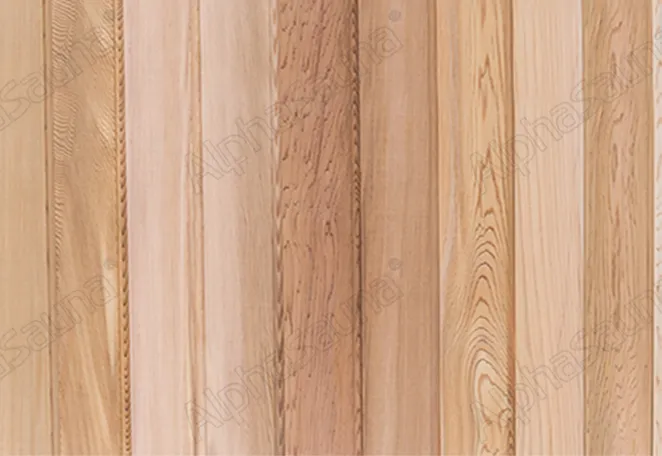
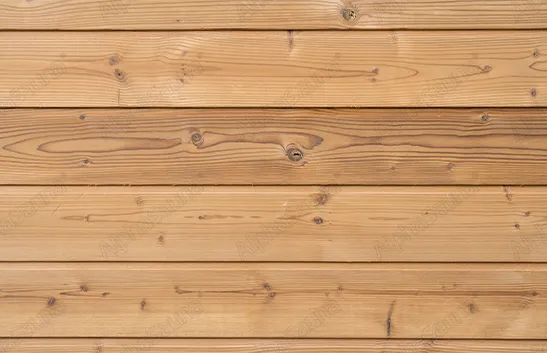
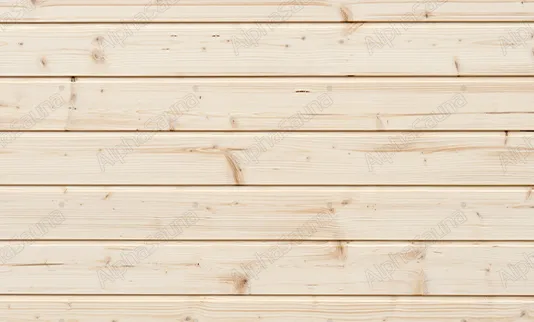
| Red Cedar | Japanese cedar | Thermo pine | Thermo hemlock | Hinoki | Hemlock |
What are the most common varieties of sauna wood on the market?
Saunas typically use cork as their primary construction material, known for its durability and resistance to high temperatures and humidity. In addition, some cork materials are naturally antibacterial. when hardwood absorbs the heat of a sauna, it heats up and becomes uncomfortable to the touch. Therefore, common types of sauna wood include the following:

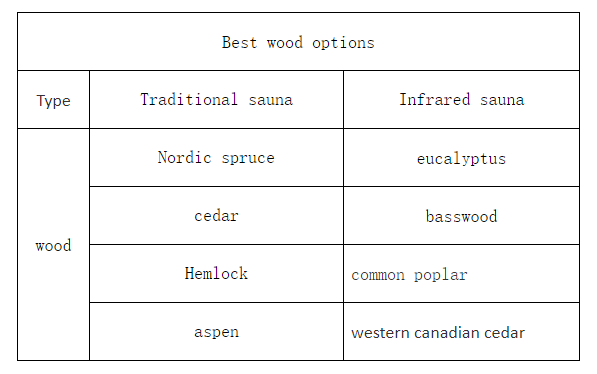
Cedar (Western Cedar and Eastern Cedar)
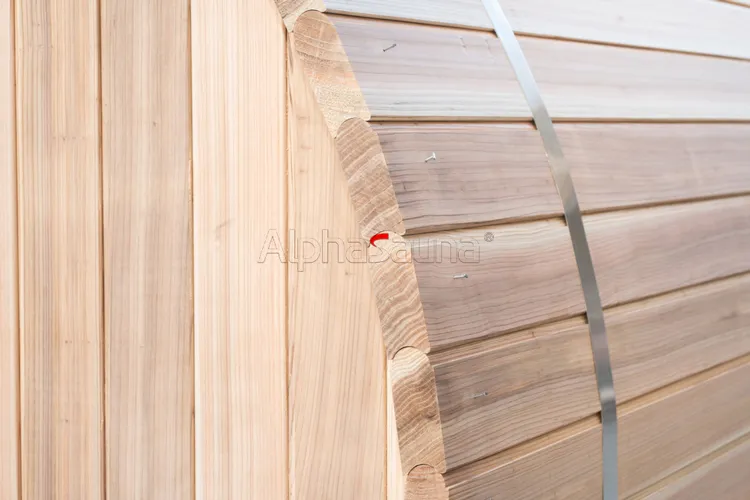
Cedar wood, also known as Canadian cedar, is utilized in both traditional and infrared saunas.. When the temperature changes in the sauna, cedar does not expand or contract like other woods because it has good stability. At the same time, cedar emits a unique aroma and possesses antibacterial properties. Additionally, cedar can withstand daily exposure to wind, frost, rain, and dew, and its sturdiness makes it very suitable for outdoor saunas.
western cedar
Western red cedar is also one of people's favorite materials. It originates from the West Coast region of North America. It features a deep red to light brown color and a fine wood texture with distinctive patterns. Western cedar is considered a high-quality choice.
Eastern white cedar
Eastern white cedar, is native to the forests of eastern Canada and the eastern and central United States. Compared with Western cedar, it is shorter and has a color ranging from light brown or tan to almost white. Therefore, it is widely used in the construction and carpentry industries.
 This picture comes from “Caterlog木绿”
Hemlock
Hemlock, like cedar, comes in several different species. In general, "Canadian Hemlock" is one of the most popular choices for indoor sauna and infrared saunas. It has a more even texture, fewer knots, and almost no odor, making it great for people with sensitive noses or allergies.
Western Hemlock
Ranging from light red to dark brown in color, its unique texture and durability make it a better match with other sauna woods. Western hemlock tends to swell a bit and is not as resistant to rot as other woods.
Nordic spruce
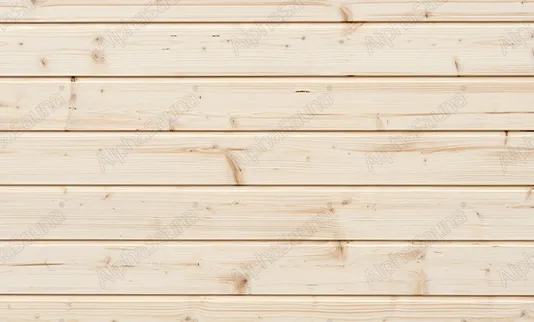
Nordic spruce, also known as Norway spruce or European spruce, is milky white in color with a slight yellow or red hue. Its good durability, resistance to rot, and natural light aroma, combined with its unique natural insect repellent properties, make it one of the most popular sauna woods in Scandinavia and other Nordic countries. Perhaps most importantly, its price is lower than other woods.
Of course, the spruce wood has been heat-treated beforehand, not only to prevent any potential sap leakage but also to enhance its durability, stability, strength, and resistance to rot.
Common poplar
Aspen is luxuriously bright in color, naturally non-toxic non-allergenic, resin-free, and moisture-proof. It is also one of the preferred woods for indoor saunas and infrared saunas. Additionally, it is popular in hotels, gym clubs, and public saunas. Aspen is also highly effective in resisting bacterial and fungal microorganisms, making it one of the cleanest wood types for saunas.
Pine
One of the most affordable sauna wood options, it shares a similar dark color with spruce but typically contains more knots. However, in high temperatures, these knots tend to dry out and fall off, making pine less ideal for use in an infrared sauna as it is more prone to resin leakage (unless heat-treated). Additionally, compared to other sauna woods, pine is more susceptible to bending and warping, resulting in lower durability.
Japanese cedar
Japanese cedar, produced in Japan, possesses good antibacterial properties, moisture resistance, durability, and insect resistance. Its fine texture and fresh, natural beauty make it an extremely attractive material. However, due to its limited supply and high original price, budget considerations should be taken into account when choosing it as a production material.
What is the most affordable sauna wood on the market?
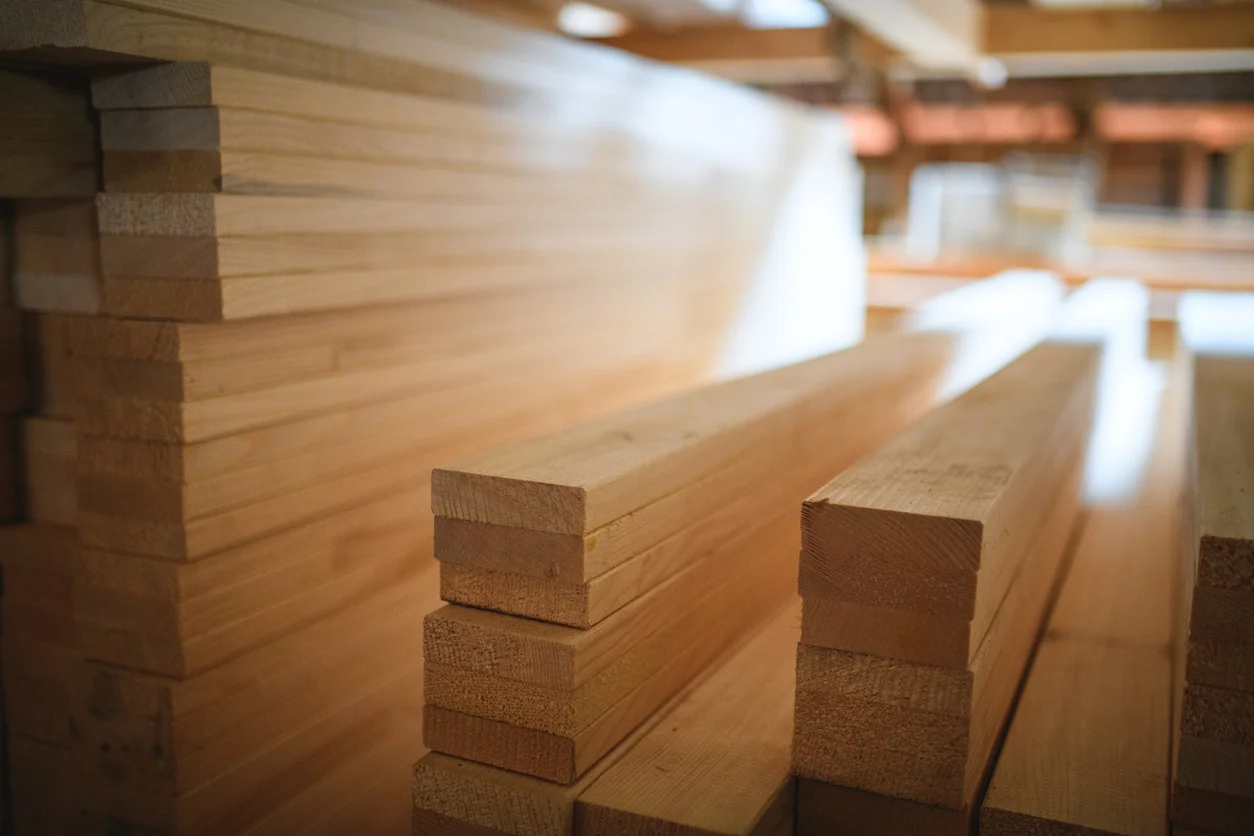
When your budget is limited, you can consider using spruce or pine, which are more affordable options. Of course, common poplar is also an affordable and lightweight sauna wood that yields good results in sauna construction.
When investing in a sauna, we prioritize the quality of its wood, service life, durability, moisture resistance, etc. The cheapest option is not necessarily the best choice.
How to care and maintain sauna wood?
1:Avoid using hard water in your sauna.
2:After using the sauna, open the sauna door for ventilation.
3:Due to frequent use, it is recommended to clean the sauna once a week and perform regular inspections and maintenance every month or quarter.
For more information on sauna cleaning and maintenance, please refer to "How to maintain and care for different types of saunas."
How long to sit in sauna after workout
Health Benefits of Sauna: How Many Calories Can You Burn?
Related Article

In this fast-paced world, getting a good night's sleep has become a challenging goal to achieve. People are often troubled by various worries, which not only affect their daily lives but also cause harm to their bodies. I hope this article can help you improve your sleep quality. Please continue reading to learn about the sleep cycle and how to use a sauna to enhance your sleep, so you can greet the new year feeling fully refreshed.
How can using a sauna improve sleep quality?
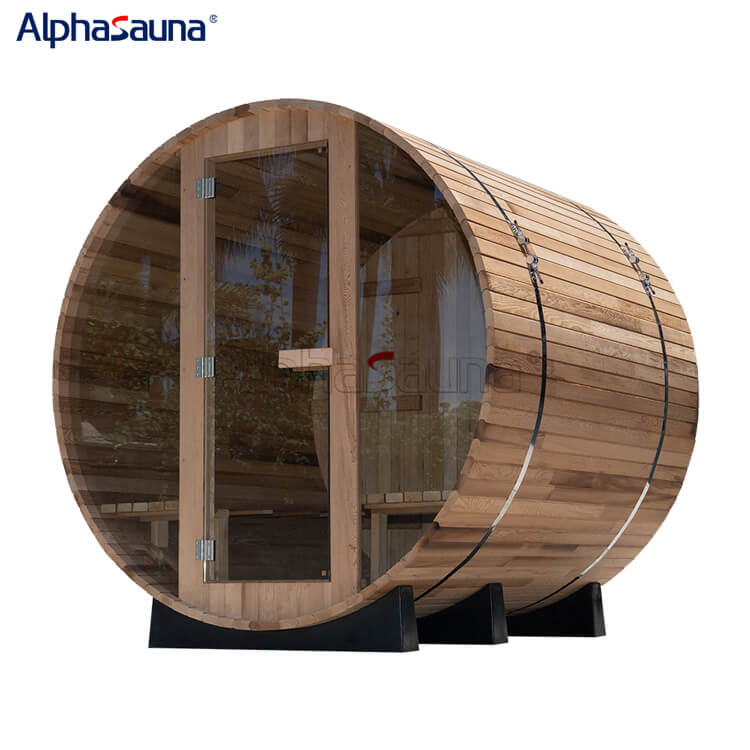
Choosing a good sauna not only enhances your comfort but also boosts your happiness during the sauna experience. This is why Alphasauna prefers the barrel sauna design. Read on to learn everything about this sauna design and the differences between barrel saunas and square saunas!
Why choose a barrel sauna?
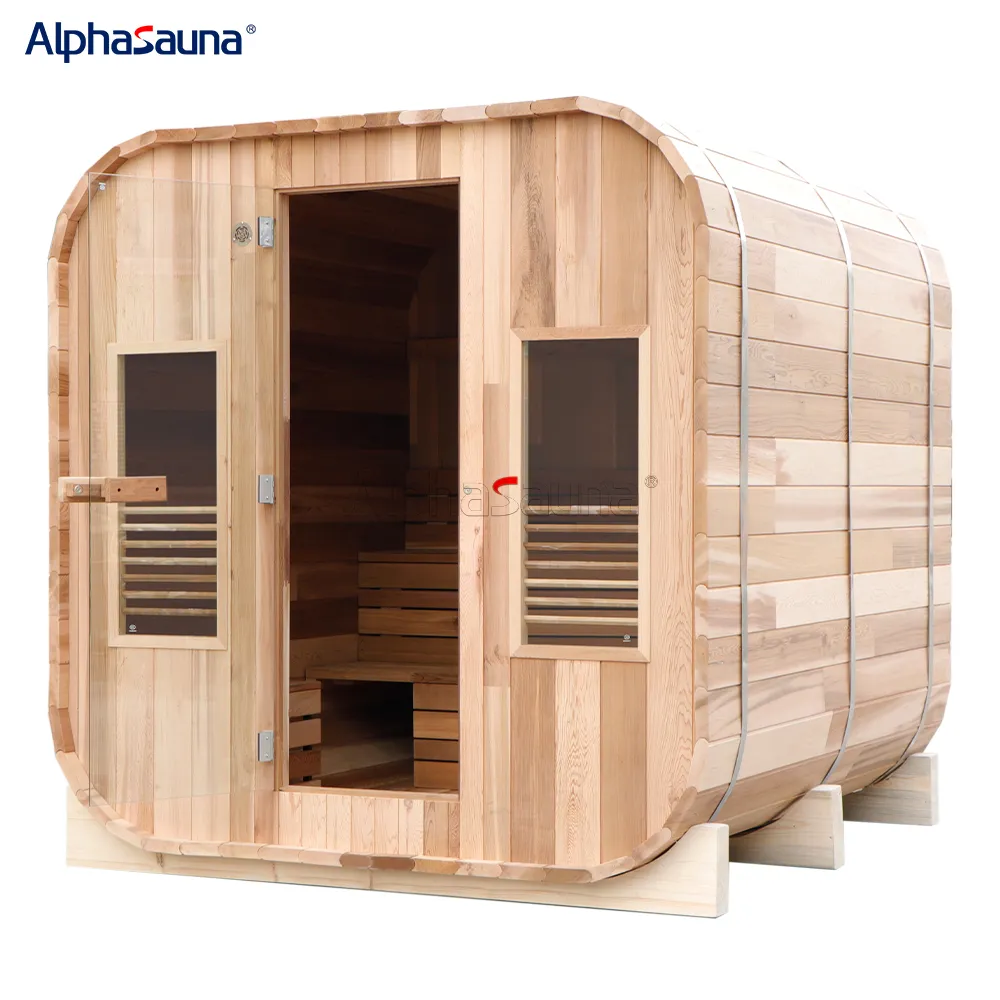
People have been exploring various methods to extend their lifespan and slow down the aging process. Scientific research suggests that regular sauna use is closely linked to longevity and overall health. Read on to learn more.
Unlocking the link between saunas and longevity
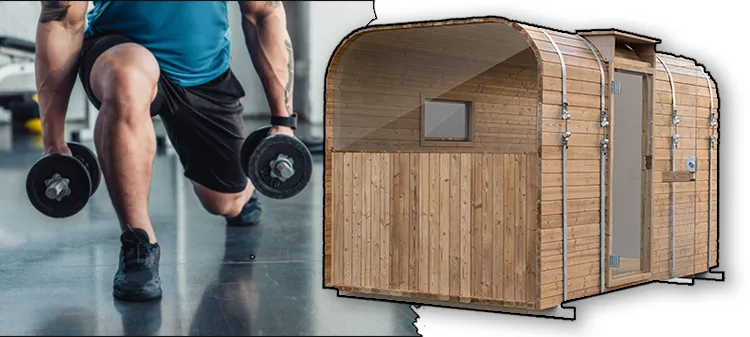
Although saunas are often used for daily health and relaxation, many athletes find that using a sauna can help them rejuvenate. You might wonder whether it's better to use a sauna before or after exercise. Don't worry—our dedicated team at Alphasauna will explain it to you in detail.
Why do athletes choose saunas for recovery?